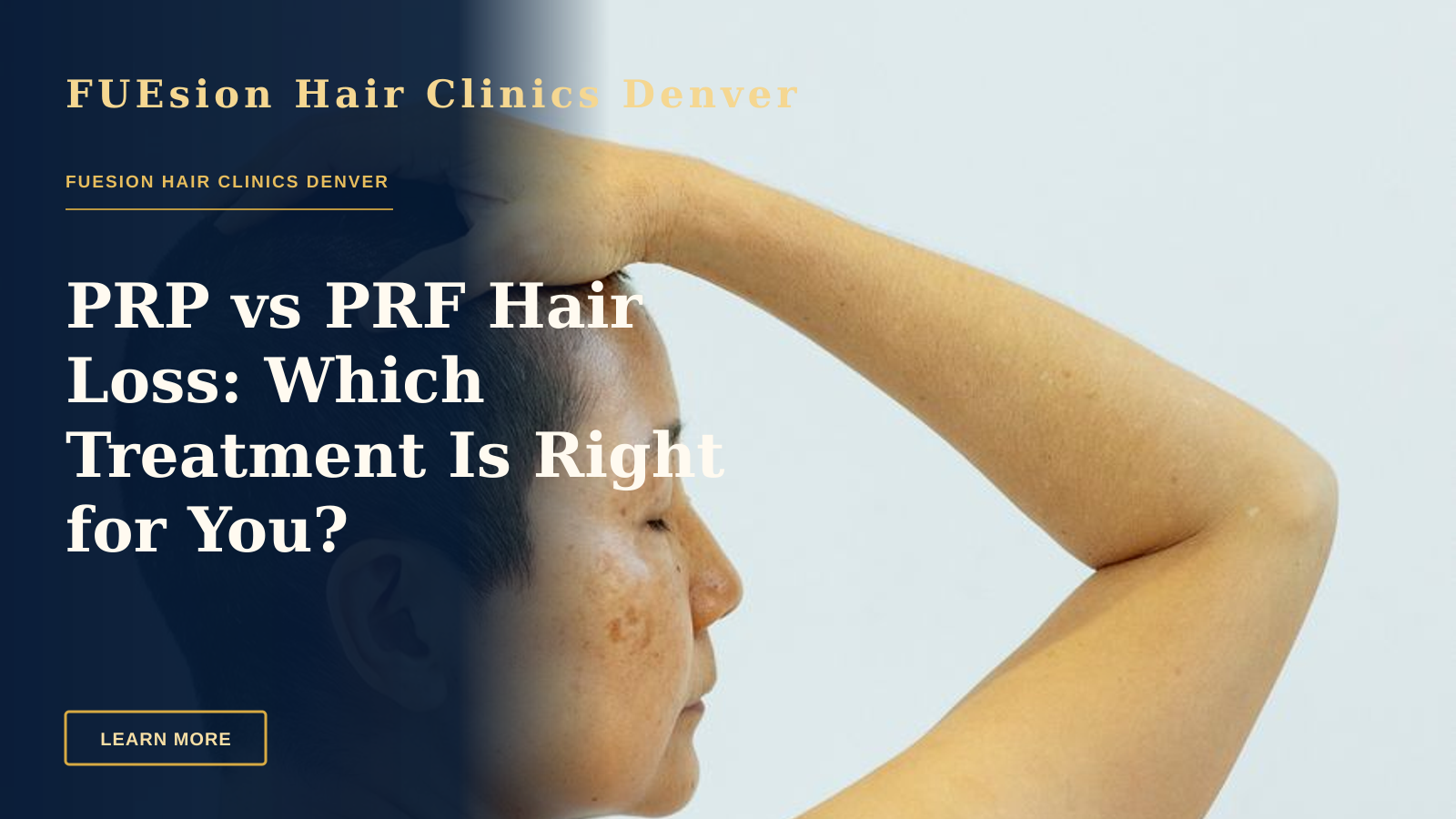
PRP vs PRF hair loss is the focus of this practical guide for clinicians and learners. If you're researching injectable, non‑surgical options for thinning hair, the comparison between PRP (platelet‑rich plasma) and PRF (platelet‑rich fibrin) is one of the most common questions. Both treatments use a patient’s own blood to deliver growth factors and signaling proteins to the scalp, but they use different preparation methods and produce different tissue environments. Which is better depends on your hair loss pattern, clinical goals, and the protocols used by the treating clinic.
This article gives a clear, practical answer up front: neither PRP nor PRF is universally superior — they are related but distinct tools. PRP is a well‑established platelets‑first plasma concentrate that releases growth factors quickly after injection. PRF forms a fibrin matrix that can provide a slower, sustained release of factors at the injection site. Evidence is still evolving, and outcomes depend strongly on preparation, injection technique, patient biology, and whether injections are combined with other therapies. Below you'll find what each therapy is, how they differ, what the evidence suggests, who may benefit, and how to evaluate a clinic — including how PRP is used alongside our non‑surgical and surgical programs here.
Patient Journey & Consultation
Choosing between PRP and PRF begins with a structured consult that looks at your hair loss pattern, medical history, and long‑term goals. You can request a free virtual or in‑person consultation through our site, and consultation requests are acknowledged promptly — site statements indicate confirmation within 24 hours and general contact responses within 2–4 business hours. During that consult clinicians review your prior treatments, medications, and photos, then recommend options that may include PRP as an adjunct to a hair transplant or non‑surgical programs such as InFuze™ Restoration. According to Mesotherapy and PRP Treatment in Combination with Hair Loss in WomenCase Report (scholarly source), this source provides relevant background for the discussion.
We encourage prospective patients to prepare digitally before the consult. Running a quick graft estimate with the Graft Calculator and generating a photo‑based preview in the AI Hair Simulator gives your surgeon a head start and makes the outcome discussion much more productive. The surgeon consultation is where the clinical plan, expected timeline and any guarantee terms are documented.
- Book a free consultation online or by phone — responses are typically within 24 hours.
- Run the Graft Calculator and AI Hair Simulator before your consult to provide visual goals and graft estimates.
- Surgeon consultation includes medical review, treatment recommendations, and documentation of expectations.
- Follow‑up appointments, monitoring and a formal 12‑month review are part of the patient pathway.
After the initial assessment clinicians will outline whether PRP or PRF alone is recommended, whether they should be combined with topical agents (like minoxidil) or with device therapies, or whether a surgical plan (FUE) with adjunctive PRP is the better path. If you’d like to start this process, book your free consultation online to speak with a clinician who can review your options and timeline.
Ready to take the next step?
Speak directly with Dr. Sanders. No obligation. Completely free.
Find out if you're a candidate for FUE Hair Transplants or non-surgical hair regrowth options.
Book Your Free ConsultationSimulator
See your potential results before you commit. Our AI Hair Simulator uses your own photo to show realistic hairline, density and style options — and generates a personalized cost estimate so you walk into your consultation knowing exactly what you want and what it costs. The simulator is powered by FlowMediq AI and is designed to be clinically informed, fast and easy to share with your surgeon.
Using the simulator before treatment lets you compare what non‑surgical programs (PRP/PRF/InFuze™) might accomplish vs. surgical restoration. The simulation highlights areas of density change and shows estimated graft counts when surgical options are on the table. This visual guide reduces uncertainty and helps align patient expectations with realistic clinical endpoints.
- Upload a clear, well‑lit frontal photo for the most accurate simulation.
- The AI analyses your hair pattern and estimates grafts or regenerative workload.
- You receive side‑by‑side before/after previews plus a personalized cost estimate.
- Save and bring your simulator results to the consultation for a precise treatment roadmap.
Start with the simulator to frame the discussion — it’s free, requires no signup, and significantly speeds up the consult process. Launch the AI Hair Simulator here.
See your potential results before you commit
AI Hair Simulator
Our AI Hair Simulator uses your own photo to show realistic hairline, density and style options — and generates a personalized cost estimate so you walk into your consultation knowing exactly what you want and what it costs.
Get Free AccessReady to take the next step?
Book a Free ConsultationPRP vs PRF: How They Work
Both PRP and PRF start with a sample of the patient’s blood, but the centrifugation technique and end product differ. PRP is a plasma concentrate rich in platelets that is typically prepared with anticoagulant and processed to achieve a higher platelet concentration in plasma. It releases growth factors relatively quickly after injection and has been used for hair‑loss stimulation for many years.
PRF is produced using a lower‑speed centrifugation without anticoagulant, resulting in a fibrin matrix that traps platelets and leukocytes. That matrix gives a more viscous material that releases growth factors more slowly over a longer window. Some clinics prefer PRF for the sustained release and the structural scaffold it provides; others prefer PRP for its established protocols and faster factor availability.
Important practical differences clinicians consider include:
- Preparation time and complexity — PRF protocols and handling differ from PRP preparation.
- Injection feel — PRF is often thicker and can be easier to place subdermally but may be handled differently than PRP.
- Release profile — PRP releases factors quickly while PRF creates a slower, sustained release via the fibrin network.
Keep in mind that technique, injection pattern (scalp coverage, depth), patient biology, and follow‑up regimen have a large impact on outcomes — often larger than the PRP vs PRF distinction alone.
Evidence And Clinical Considerations
Clinical literature shows that platelet concentrates can improve hair density and thickness for many patients with androgenetic alopecia, but study quality, protocols and outcomes vary widely. Head‑to‑head comparisons between PRP and PRF are limited; some small comparative series suggest PRF may provide similar or modestly improved outcomes for certain metrics because of the sustained release, while other reports show benefit with standard PRP protocols. Definitive large randomized trials comparing modern PRP and PRF methods are still sparse.
Because protocols matter, focus your evaluation on the clinic's specific process: how much blood is drawn, centrifugation speeds and times, platelet concentration achieved, injection mapping and volumes, and recommended treatment course. Ask for documented protocols and expected timelines so you can compare apples to apples.
- Expect a course of multiple sessions (commonly 3 sessions spaced 4–8 weeks apart) followed by maintenance dosing; exact regimens vary.
- Combine with medical therapy (topical/oral) or device therapy for a higher chance of meaningful response.
- Measure outcomes with photos and follow‑up visits; objective metrics like hair counts or phototrichograms increase confidence in results.
In practice, many clinicians individualize between PRP and PRF based on patient goals, tolerance for injections, and whether a sustained matrix is desirable. During your consultation ask for the clinic’s published outcome examples and protocol details so you understand the expected effect size and timeline.
Want personalized advice?
Schedule Your AssessmentWho Is Most Likely To Benefit?
Platelet concentrates are generally most effective in patients with early‑to‑moderate androgenetic thinning where viable (non‑scarred) follicles remain. They are less likely to restore large, bald areas on their own, where surgical transplant or combined approaches are typically required. Candidates should be medically stable, not actively anticoagulated without medical clearance, and have realistic expectations about gradual improvement over months.
When surgical restoration is part of the plan, PRP is commonly used as an adjunct to improve healing and potentially boost graft survival; our services list includes PRP therapy as an adjunctive follicular stimulation option. Non‑surgical platforms such as InFuze™ Restoration offer alternative or complementary paths for patients who prefer zero downtime procedures.
- Best candidates: early‑stage thinning, good donor hair (if transplant is considered), and those willing to follow maintenance regimens.
- Less likely to benefit: long‑standing complete baldness without donor options, or active scalp scarring without appropriate surgical plans.
- Consider combination therapy for larger gains — platelet concentrates plus topical or device therapy, or PRP plus FUE for transplant patients.
Services & Procedures
We offer a comprehensive menu of surgical and non‑surgical hair restoration services so that PRP, PRF (if requested), device therapies and transplants can be combined appropriately for each patient. Our approach emphasizes documented protocols, surgeon oversight, and clear timelines so patients know what to expect from the first consult to the 12‑month review. Visit our main site for details at FUEsion Hair Clinics — Denver.
Below is a concise overview of core services and how they relate to regenerative injections and hair loss care. Each procedure is delivered with clinical oversight and an individualized plan.
The most relevant services for patients weighing PRP vs PRF include:
- Hair Transplant (AI & AR Assisted FUE / FUEsion Hair Transplant): Duration 4–7 hours (longer for large cases); local anesthesia; return to work 5–7 days; visible results from 6 months and full by 12–18 months; reported graft survival >95% under our protocols.
- InFuze Non‑Surgical / InFuze™ Restoration: ScalpPulse Technology, no surgery or downtime — suitable for early–mid stage thinning or adjunctive therapy.
- PRP therapy: Offered as an adjunctive follicular stimulation and healing aid, typically integrated into non‑surgical programs or surgical aftercare.
- Free Virtual Consultation & Digital Tools: AI Hair Simulator and Graft Calculator to visualize outcomes and estimate graft counts before you book.
These offerings are coordinated into a personalized roadmap including pre‑op planning, day‑of care and post‑op follow‑up. For bookings and more detailed procedural pages see our Services page or book a free consultation to discuss which combination is best for your needs.
See your potential results before you commit
AI Hair Simulator
Our AI Hair Simulator uses your own photo to show realistic hairline, density and style options — and generates a personalized cost estimate so you walk into your consultation knowing exactly what you want and what it costs.
Get Free AccessAdditional booking links: View all services • Book a free consultation • See results gallery.
See how we can help you
Get Started TodayTrust & Guarantee (FUEsion Assurance)
Transparency and patient protection are core to our care model. The FUEsion Assurance is an industry‑first, fully enumerated guarantee that documents growth expectations, artistry, aftercare and satisfaction remedies. The Assurance is discussed and finalized during consultation and is activated through the formal 12‑month review where growth benchmarks are assessed.
The Assurance gives patients a clear remediation pathway if outcomes fall short. Discussing the Assurance is part of the consultation process — book your consult here and review the Assurance details with your surgeon so you understand how corrective steps are handled.
- Growth Assurance: A minimum graft survival/growth benchmark is agreed; supplemental grafts are provided at no cost if benchmarks aren’t met at 12 months when indicated.
- Artistry Assurance: Pre‑operative hairline and aesthetic plans are documented; corrective work is provided if the outcome deviates significantly from the plan.
- Aftercare Assurance: Post‑operative visits, surgeon access, and follow‑up care are included during recovery and monitoring.
- Satisfaction Assurance: We commit to addressing concerns promptly and working toward the published outcome objectives until you are satisfied.
The Assurance provides an extra layer of confidence when you choose a treatment plan that includes injectables, device therapies, or transplant work. If you want to understand how the Assurance applies to regenerative injections specifically, request the consultation and the team will document the applicable terms as part of your post‑op plan.
Ready to take the next step?
Speak directly with Dr. Sanders. No obligation. Completely free.
Find out if you're a candidate for FUE Hair Transplants or non-surgical hair regrowth options.
Book Your Free ConsultationCombining PRP/PRF With Other Therapies
Many patients get the best results from combination strategies. PRP (or PRF) can be paired with topical and oral therapies, low‑level laser devices, microneedling, or used as a perioperative adjunct to improve healing after FUE. Non‑surgical InFuze™ ScalpPulse Technology offers a different mechanism — multi‑modal scalp activation plus targeted compound infusion — and can be used alone or as part of a combined plan when surgery is not desired.
When a transplant is planned, PRP is commonly used to support donor and recipient site healing and to potentially enhance graft take. Discussing a combined course in the initial consult lets your surgeon plan logistics so treatments are timed for maximum synergy and minimal downtime.
- Adjunctive PRP after transplant may improve healing and discomfort.
- Non‑surgical regimens (InFuze™) can reduce the need for immediate surgery in certain early cases.
- Combining device therapy and topical medication increases the chance of meaningful regrowth.
How To Evaluate A Clinic For PRP/PRF
Because outcomes depend heavily on technique, vet your clinic carefully. Ask for the exact PRP/PRF protocol (draw volume, centrifuge speed/time, platelet yield), documented before/after cases with similar hair loss patterns to yours, and whether injections will be performed by a licensed medical professional. Confirm follow‑up schedules and whether objective monitoring (phototrichograms or standardized photos) will be used.
Useful verification steps include using the AI Hair Simulator and bringing that output to your consult, asking to see a full treatment plan with expected steps and timelines, and confirming any guarantee or remediation policies. For technology‑focused information on surgical and non‑surgical options, review our Hair Regrowth Technology pages and the gallery of results to match documented outcomes to your goals.
- Confirm who performs injections — licensed medical professionals provide consistent oversight.
- Request documented protocols and outcome examples for the exact technique the clinic uses.
- Understand follow‑up, maintenance needs, and any applicable guarantee terms.
Use the AI Hair Simulator and the Graft Calculator to prepare for your visit: AI Hair Simulator • Cost Estimate & Graft Calculator • Hair Regrowth Technology.
Conclusion
PRP and PRF are closely related regenerative treatments that can improve hair thickness and slow progression in many patients with early to moderate thinning. The choice between them should be guided by documented clinic protocols, your hair loss pattern, tolerance for procedures, and whether the injections are being used alone or as part of a combined plan that includes InFuze™ or FUE transplantation. High‑quality outcomes depend more on protocol consistency and injection technique than on the label "PRP" or "PRF" alone.
If you’re ready to decide, the most useful next steps are to run our AI Hair Simulator to visualize potential results and book a free consultation so a surgeon or medical specialist can examine your scalp, review your history, and recommend a personalized plan. For a convenient start, launch the AI Hair Simulator or book your free consultation today — bring the simulator results with you and we'll document a clinical plan and Assurance terms during the visit.
FAQ
Does PRF work better than PRP for hair loss? Current comparative data are limited. PRF provides a fibrin matrix with slower release of growth factors and may have advantages in some small series, but high‑quality head‑to‑head trials are limited. Discuss the clinic’s protocol and outcome data to decide which is best for you.
How many sessions will I need? Typical regimens are 3 sessions spaced 4–8 weeks apart followed by maintenance; exact plans depend on the protocol, response and whether treatments are combined with other modalities.
Can PRP/PRF replace a hair transplant? For early to moderate thinning, injectables may achieve meaningful improvement. For advanced baldness or to restore a hairline and large areas, surgical transplant (FUE) is usually required; PRP may be used as an adjunct for healing and graft support.
Does your clinic offer PRP? Yes. PRP therapy is included in our service menu as an adjunctive follicular stimulation option. If you are specifically interested in PRF, request it during your consult and the team will discuss availability and protocols.
Primary CTAs: Book a Free Consultation • Try the AI Hair Simulator • Get a Cost Estimate.
Medical Information Disclaimer
This content is provided for general educational purposes only. It is not a substitute for professional advice, diagnosis, or treatment. Readers are advised to consult qualified professionals for personalized recommendations.
Have questions? We have answers.
Speak With an Expert