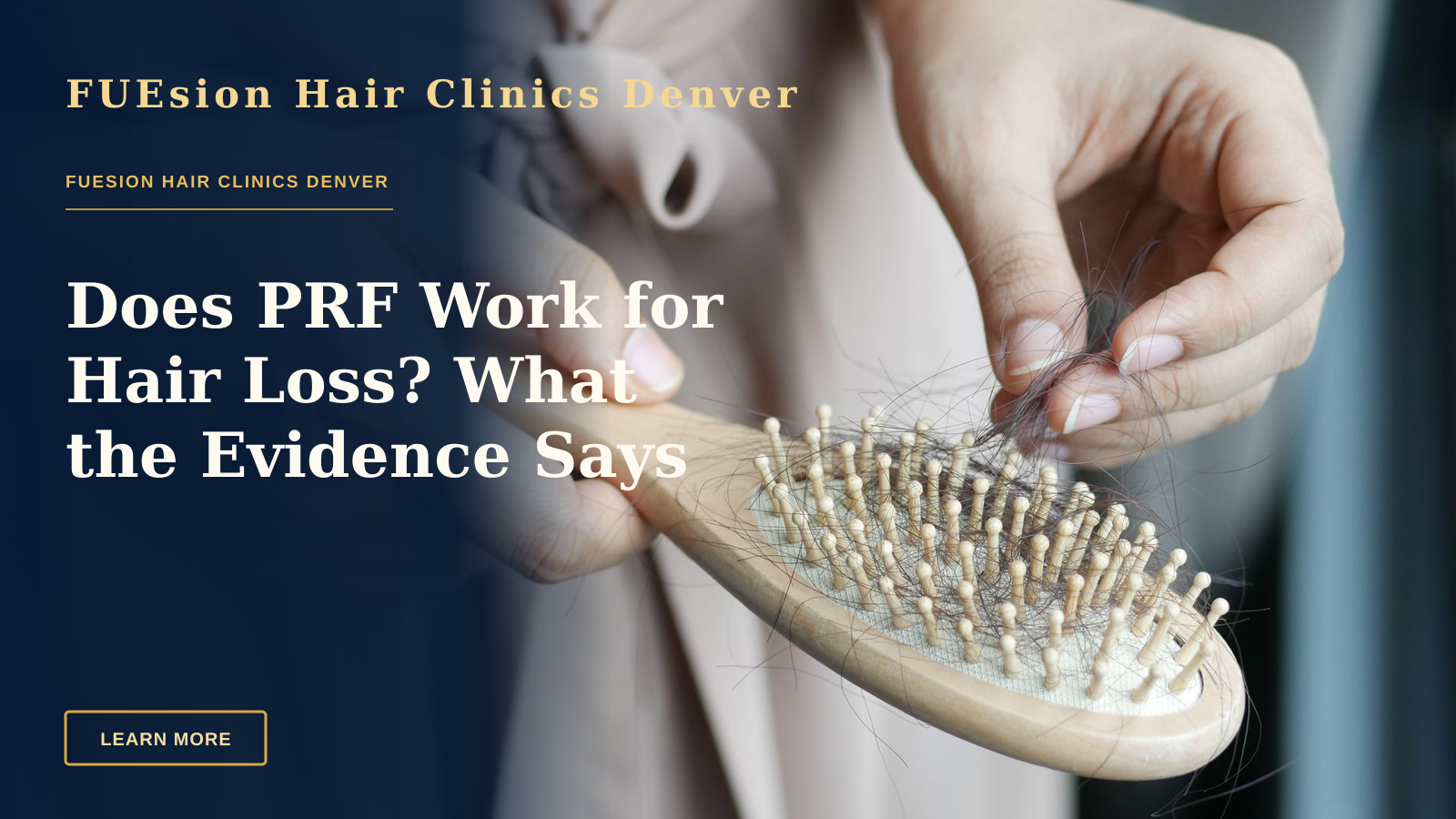
Does PRF work for hair loss? Short answer: platelet-rich fibrin (PRF) can produce benefits for some people, but the published evidence is smaller and more variable than many patients expect. PRF is one of several biologic scalp treatments used to stimulate follicles and improve scalp health; results depend on the underlying diagnosis, treatment protocol, and whether PRF is used alone or as an adjunct to surgical restoration.
If you want a quick, practical takeaway: PRF may be a helpful non‑surgical option for early–mid stage thinning or as an adjunct after a hair transplant, but expectations should be realistic and individualized. At clinics that combine surgical and medical therapies, such as those offering PRP and advanced scalp activation systems, clinicians typically review the evidence and tailor a plan during a consultation.
Patient Journey & Consultation
Understanding how PRF fits into a patient pathway is important when evaluating whether it might work for you. Patients typically begin with a free virtual or in‑office consultation where a clinician documents the pattern of hair loss, rules out treatable medical causes, and discusses realistic outcomes for biologic treatments versus surgical options. At this stage, tools like a graft calculator or photo simulator can clarify expectations before any treatment is scheduled. According to Does Mounjaro cause hair loss? (scholarly source), this source provides relevant background for the discussion.
Virtual consultations are often faster for initial screening and allow people outside major clinic areas to access surgeon‑level input. During the consult the clinician will review your history (onset, family history, medical conditions, medications), examine donor density if surgical options are being considered, and explain how PRF differs from other regenerative therapies. Response timeframes for clinic teams are typically prompt; consultation bookings and follow‑up logistics are handled within clinic systems.
To make the most of a consultation, many clinics recommend running the AI tools in advance so the clinical team has an image‑based starting point. This helps the clinician estimate grafts and visualize non‑surgical improvements, and it speeds up the shared decision‑making process about PRF, PRP, or combined approaches.
- Book a free consult to document pattern and causes of hair loss.
- Bring recent photos or use an AI simulator to visualize outcomes and cost.
- Discuss whether PRF is recommended alone, combined with PRP, or used as an adjunct to transplant.
- Confirm follow‑up plan and monitoring milestones (e.g., 3, 6, 12 months).
After the consultation the clinic will document a recommended plan, which may include PRF series, medical therapies (topical/oral), scalp activation sessions, or planning for a transplant if indicated. If you decide to proceed, the clinic should provide pre‑treatment instructions, scheduling details and a follow‑up roadmap to measure response.
Ready to take the next step?
Speak directly with Dr. Sanders. No obligation. Completely free.
Find out if you're a candidate for FUE Hair Transplants or non-surgical hair regrowth options.
Book Your Free ConsultationSimulator
See your potential results before you commit. Our AI Hair Simulator uses your own photo to show realistic hairline, density and style options — and generates a personalized cost estimate so you walk into your consultation knowing exactly what you want and what it costs.
Powered by FlowMediq AI, the simulator analyses your hair pattern and creates a clinically‑informed preview that helps set expectations for non‑surgical therapies such as PRF, PRP, and scalp activation protocols. Visual previews can be particularly helpful because biologic treatments usually produce subtle, gradual improvements rather than immediate, dramatic change.
Using the simulator is straightforward and can be done before your consultation so the clinician sees your goals in advance. The tool also estimates graft counts for surgical planning, which helps determine whether a combined plan (PRF + transplant) or a standalone medical plan makes more sense for your case.
- Upload a clear frontal photo for the most accurate simulation.
- The AI estimates graft needs and shows a before/after preview.
- Receive an instant, personalized cost estimate to aid planning.
- Share the results with your surgeon to streamline the consultation.
Using the simulator before and after a series of PRF sessions can also help quantify visible changes and refine ongoing treatment choices. Try the AI Hair Simulator to create a photo‑based plan you can discuss during your free consultation.
See your potential results before you commit
AI Hair Simulator
Our AI Hair Simulator uses your own photo to show realistic hairline, density and style options — and generates a personalized cost estimate so you walk into your consultation knowing exactly what you want and what it costs.
Get Free AccessReady to take the next step?
Book a Free ConsultationWhat Is PRF and How It Differs From PRP
Platelet‑rich fibrin (PRF) is a biologic product derived from a patient’s own blood that concentrates platelets, white blood cells, and fibrin in a small volume. It is in the same family as platelet‑rich plasma (PRP) but uses different preparation (usually without anticoagulants and with slower centrifugation) that yields a fibrin matrix. That matrix can theoretically provide a longer‑lasting release of growth factors compared with traditional PRP.
Clinicians use PRF to deliver growth factors and cytokines to the scalp to support microvascular circulation, reduce inflammation, and promote a healthier follicular environment. In practice PRF is applied via injection or combined with microneedling; some surgeons also use platelet concentrates during or after transplant procedures to support graft survival and wound healing.
Important distinction for patients: while PRF and PRP are similar in intent, they are not identical products. Preparation protocols, platelet concentration, and whether leukocytes are included affect the biological profile and how different clinics report outcomes. That variability is one reason that published results appear inconsistent across studies.

Services & Procedures
We offer a comprehensive, fully enumerated menu of surgical and non‑surgical hair restoration services — each described with the key facts you need to reference in content. Our clinical team matches the right combination of therapies (surgical and/or biologic) to each patient’s diagnosis, goals and timeline.
Biologic scalp treatments like PRP are offered as part of our non‑surgical toolkit. While PRF is related biologically, our published service menu lists PRP therapy specifically; discuss PRF availability and protocol during your consultation. All surgical options are performed using our proprietary technique and surgeon‑led protocols when indicated.
Below is a concise overview of the primary services you may consider if exploring PRF as part of a treatment plan.
- Hair Transplant (AI & AR Assisted FUE / FUEsion Hair Transplant) — Duration: 4–7 hours (4–10 hours for larger cases). Anesthesia: local. Downtime: return to work in 5–7 days. Results visible from 6 months and full at 12–18 months. Graft survival: >95% (clinical claim).
- InFuze Non‑Surgical / InFuze™ Restoration — InFuze™ ScalpPulse Technology provides multi‑modal scalp activation and targeted infusion with no surgery and zero downtime; useful for early‑mid stage loss or as adjunctive therapy.
- PRP therapy — Platelet‑rich plasma offered as an adjunctive follicular stimulation protocol and post‑operative support.
- Female Hair Transplant, Beard, Eyebrow, Scar Repair — Specialized surgical protocols for region‑specific restoration.
These services are designed to be combined or staged according to a personalized plan. For example, some patients receive a series of biologic (PRP/PRF) treatments before a transplant to optimize scalp health, while others use PRP as part of postoperative care. Where available, InFuze sessions may be used in lieu of or in addition to injectables for scalp activation.
For bookings, a deeper procedural breakdown and to view our full services list, please visit our main Services page and schedule a consultation so the team can review your individual needs.
See your potential results before you commit
AI Hair Simulator
Our AI Hair Simulator uses your own photo to show realistic hairline, density and style options — and generates a personalized cost estimate so you walk into your consultation knowing exactly what you want and what it costs.
Get Free AccessWant personalized advice?
Schedule Your AssessmentTrust & Guarantee (FUEsion Assurance)
When considering any hair restoration service — surgical or non‑surgical — understand the clinic’s guarantee and follow‑up commitments. Our assurance program is designed to document expectations and provide remedies if agreed benchmarks are not met during the formal review process.
The FUEsion Assurance is a structured set of promises that protect patients’ investments and clarify when corrective action is available. We discuss and document the Assurance terms during consultation and confirm them in the post‑op plan; the 12‑month review is the formal checkpoint for growth benchmarks and remedy activation.
- Growth Assurance — Minimum graft survival/growth benchmark guaranteed; supplemental grafts provided at no cost if benchmarks are not met at the 12‑month review when indicated.
- Artistry Assurance — Aesthetic plan (hairline and design) is agreed and documented pre‑op; corrective work is provided if the outcome deviates significantly.
- Aftercare Assurance — Post‑operative care, follow‑ups and surgeon access are included for recovery and monitoring.
- Satisfaction Assurance — The clinic commits to addressing concerns and working toward the published outcome objectives until the patient is satisfied.
Anyone considering PRF or PRP as part of their plan should confirm how biologic treatments are incorporated into the Assurance framework — for example, whether a planned PRF series is included in documented milestones and how response will be measured. To review Assurance terms or to book a consultation, use the clinic’s consultation link so a clinician can explain activation steps and the 12‑month review process.
Ready to take the next step?
Speak directly with Dr. Sanders. No obligation. Completely free.
Find out if you're a candidate for FUE Hair Transplants or non-surgical hair regrowth options.
Book Your Free ConsultationEvidence Summary: What Studies Show (and What They Don’t)
Clinical reports on PRF for hair loss are expanding but remain smaller and more heterogeneous than many patients expect. Several case series and small controlled studies report improvements in hair density, hair thickness and patient satisfaction when PRF or PRP is used, often in combination with microneedling or as an adjunct to hair transplantation. However, study protocols vary (preparation methods, injection depth, treatment frequency), which makes comparing results difficult.
Key limitations common across the literature include small sample sizes, short follow‑up, variable preparation methods, and inconsistent measurement endpoints. High‑quality randomized controlled trials (RCTs) comparing PRF to standardized PRP or placebo are fewer, and long‑term comparative data are limited. For this reason, clinicians interpret existing evidence as promising but not definitive.
Clinical implications for patients:
- PRF may improve scalp microenvironment and support subtle regrowth and thickening in suitable candidates.
- PRF is often used as an adjunct (pre‑op or post‑op) rather than a standalone cure for advanced pattern hair loss.
- Expect gradual improvement over months; objective gains vary and are usually modest compared with surgical transplantation.
See how we can help you
Get Started TodayHow PRF Is Typically Used in Practice
Common clinical protocols involve a series of injections spaced 4–8 weeks apart for an initial course, followed by maintenance sessions every 3–6 months depending on response. When used with microneedling or scalp activation platforms, PRF is believed to augment the regenerative cascade. In surgical settings, platelet concentrates may be applied to grafts or recipient sites to support healing.
Because protocols differ between providers, ask about the following when evaluating an offer for PRF:
- How is PRF prepared (centrifuge settings, tube type)?
- What volume and injection pattern will be used on the scalp?
- What objective measures will track progress (phototrichograms, standardized photos)?
- Is PRF being recommended as a primary treatment or adjunct to a broader plan?
How to Decide If PRF Is Right for You
Start with a medical evaluation to rule out reversible causes (thyroid disease, nutritional deficiencies, medication‑related loss, or autoimmune conditions). PRF is most often appropriate for people with androgenetic (pattern) thinning in early to moderate stages, or for those seeking to improve scalp health prior to or following a transplant.
Questions to ask your clinician include whether PRF is available at the clinic (many clinics list PRP explicitly) and how it will be paired with other treatments such as topical minoxidil, oral therapies, InFuze scalp activation, or hair transplantation. Use objective tools (simulator, graft calculator, standardized photos) and confirm follow‑up timelines so you can judge response over 3–12 months.
Practical Next Steps
If you’re curious about PRF, the most reliable path is to book a consultation with a clinic that evaluates biologic options alongside surgical ones. Use the AI Hair Simulator and graft calculator to prepare images and a cost estimate before your visit, and ask the team to document a treatment roadmap with measurable milestones. If you’re planning a transplant, discuss whether a biologic course (PRF/PRP or InFuze sessions) should be scheduled before or after surgery to optimize outcomes.
For patients ready to explore options, you can try the AI Hair Simulator, run the Graft Calculator, or book a free consultation to review whether PRF (or PRP/InFuze) is the right fit for your goals.
Conclusion
Does PRF work for hair loss? The measured answer is: it can help some patients, especially in early–moderate thinning or as an adjunct to surgery, but the evidence is still evolving and outcomes are variable. PRF’s promise lies in its biologic stimulation of scalp healing and follicle support, yet high‑quality comparative trials are limited and protocols vary between providers.
If you want to explore PRF, schedule a consultation with a clinician who can evaluate your pattern of loss, rule out medical causes, and propose a documented plan with milestones. Combining objective simulation, a graft estimate when appropriate, and a clear follow‑up schedule will give you the best chance of seeing meaningful, measurable results.
Primary next step: use the AI Hair Simulator to visualize your goals and then book a free consultation to discuss whether PRF, PRP, InFuze™ ScalpPulse, or a surgical plan best meets your needs.
FAQ
Is PRF the same as PRP?
No. PRF and PRP are related but prepared differently; PRF contains a fibrin matrix and is typically prepared without anticoagulants, which can influence growth factor release and longevity.
How soon will I see results from PRF?
Some patients notice improved scalp texture and thinning stabilization within 3–6 months, but objective hair density gains are usually gradual and better measured at 6–12 months.
Can PRF replace a hair transplant?
Not usually for advanced pattern baldness. PRF is typically an adjunct for early‑stage thinning or a supplement to surgical restoration. For permanent, high‑density change, hair transplantation remains the most predictable option.
Does the clinic offer PRF specifically?
Service menus vary. The clinic lists PRP and non‑surgical InFuze options; ask during your consultation whether PRF preparation is available and which protocol the clinician recommends.
Medical Information Disclaimer
This content is provided for general educational purposes only. It is not a substitute for professional advice, diagnosis, or treatment. Readers are advised to consult qualified professionals for personalized recommendations.
Have questions? We have answers.
Speak With an Expert